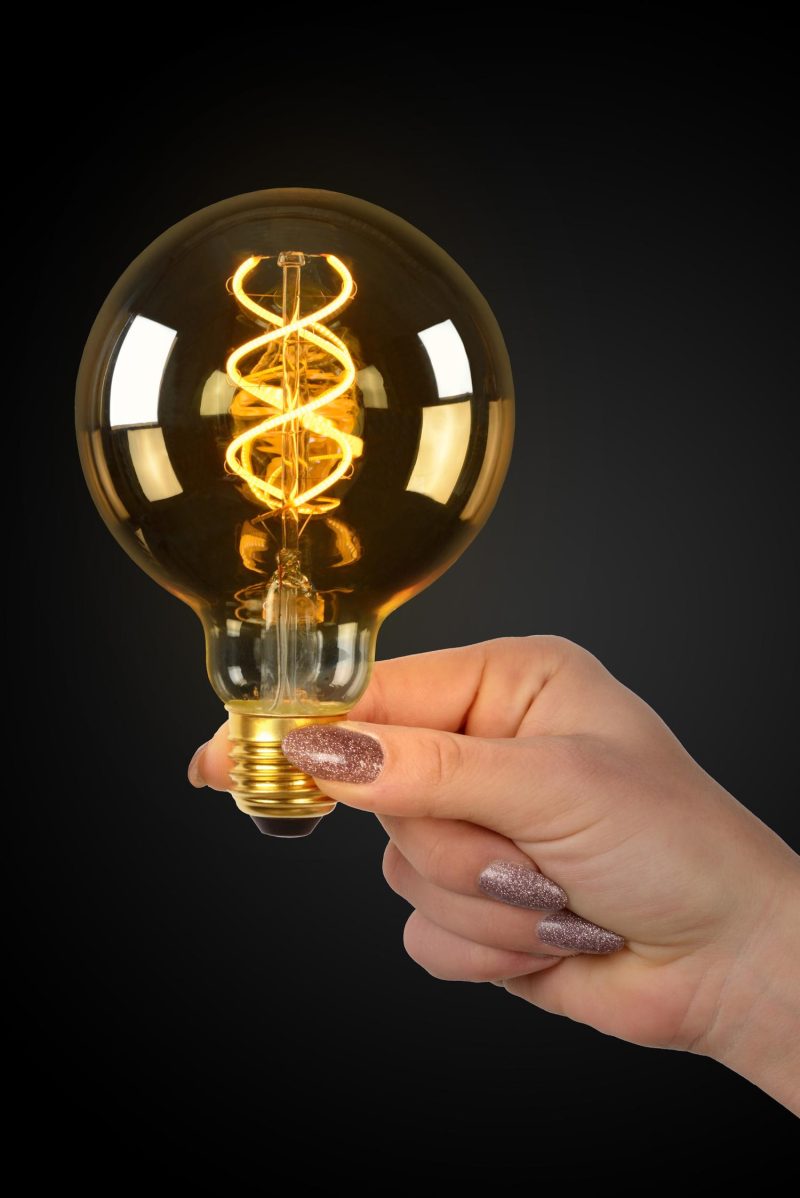
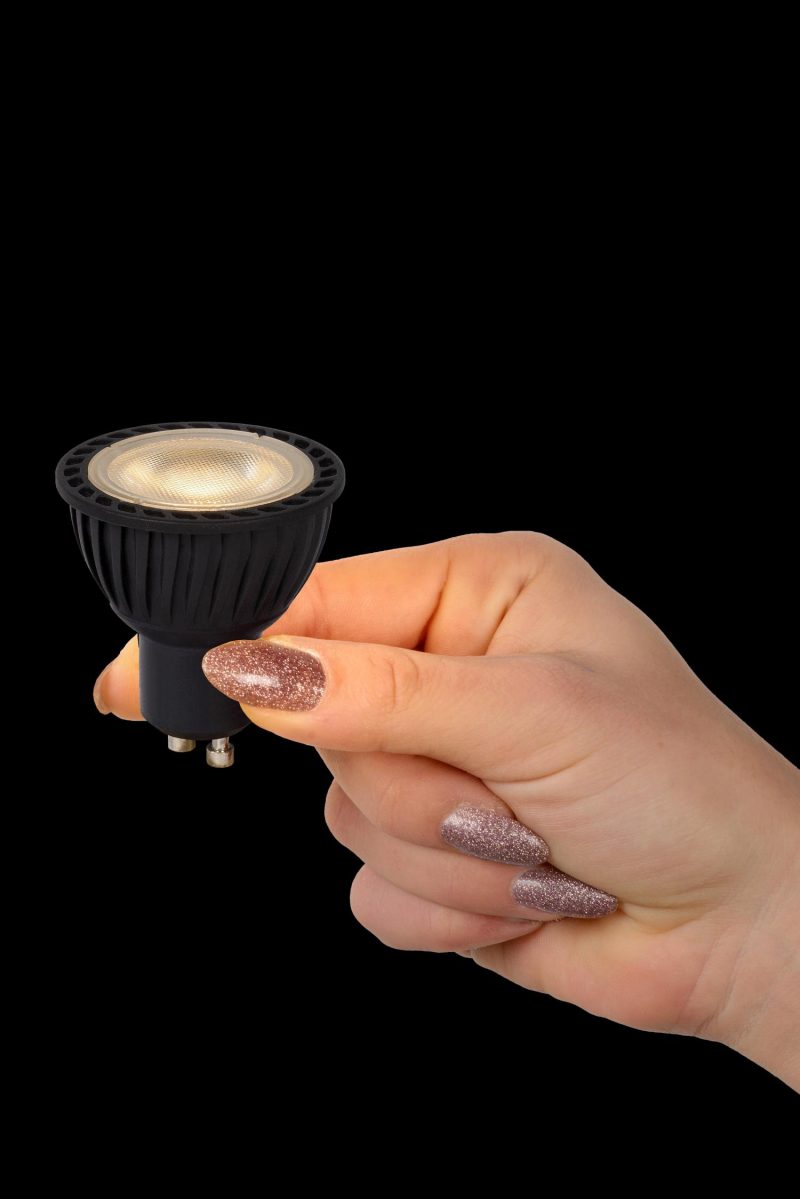
Work with lux, not watts. As basic lighting, 100 to 150 lux is enough in the living room and bedroom, a hallway needs 100 lux, a bathroom 300 lux and a kitchen worktop or desk 500 lux. Multiply the lux by the floor area and divide by about 0.55 for the light that walls, ceiling and lampshades do not reflect. A 20 m² living room thus comes to about 5,500 lumens, spread over five light points.
How many lumens do you need per square metre?
For the basic lighting in a living room, allow 200 to 300 lumens per square metre of floor. A kitchen, a bathroom or a home office needs 550 to 900 lumens per square metre. Those figures come from two steps: first you determine how much light has to reach the floor or the work surface, expressed in lux, and then you convert that into what the lights together have to emit, expressed in lumens.
Lumens are the amount of light a bulb emits in all directions. Lux is the amount of light that falls on a surface: one lux is one lumen per square metre. An 800-lumen bulb above a 1 m² table would therefore give 800 lux if all its light fell exactly on that table. That never happens. Part goes to the walls and the ceiling, part stays inside the shade, and how much the walls reflect depends on their colour.
Watts no longer tell you anything about this. Watts are the power consumption, and a 3.8 W LED bulb gives as much light as a 60 W incandescent bulb. The conversion table is further down.
How many lux does each room need?
For homes there is no binding standard, unlike for workplaces. The European standard for indoor workplaces, EN 12464-1, does give useful reference points: 500 lux for reading and writing, 100 lux in corridors and other circulation areas. Licht.de, the knowledge centre of the German lighting industry, recommends 500 to 650 lux on the worktop in the kitchen and at least 300 lux in the bathroom. For the living room and the bedroom, the values below are common practice.
| Room or task | Guide value | Lumens per m² of floor | Basis |
|---|---|---|---|
| Living room, basic lighting | 100–150 lux | 180–270 lm | Common practice |
| Reading spot in the living room | 300–500 lux on the book | Reading or floor lamp | EN 12464-1: 500 lux for reading |
| Dining table | 200–300 lux on the tabletop | Pendant light above the table | Common practice |
| Kitchen, general | 300–500 lux | 550–900 lm | licht.de |
| Kitchen worktop | 500–650 lux | Worktop lighting | licht.de |
| Bathroom, general | 300 lux | 550 lm | licht.de |
| Bedroom, basic lighting | 50–100 lux | 90–180 lm | Common practice |
| Hall, corridor, landing | 100 lux | 180 lm | EN 12464-1: circulation areas |
| Home office | 500 lux on the desk, 300 lux in the room | 550 lm for the room | EN 12464-1, licht.de |
The task values apply where the task takes place, not in the whole room. A desk at 500 lux in a room at 300 lux is fine; a whole living room at 500 lux is too bright to relax in. That is why you do not count reading lamps and worktop lighting towards the basic lighting, but plan them separately on top.
Why you do not simply multiply lux by square metres
Lux times area gives the light that has to reach the floor. The lights have to emit more, because light is lost along the way. Lighting designers work this out with the utilisation factor method, in German specialist literature the Wirkungsgradverfahren. According to that method, the share of the lamp light that reaches the work surface depends on three things: how the fixture distributes its light, how much the ceiling, walls and floor reflect, and the ratio between the dimensions of the room and the height of the lights.
For an ordinary room with a white ceiling and light walls, in practice a little more than half of the lamp light ends up on the work surface. That gives the rule of thumb:
lumens = lux × m² ÷ 0.55
Use 0.6 for a spacious room with a white ceiling, white walls and lights that shine downwards. Use 0.45 for dark walls, a ceiling higher than 3 m, or many lights with fabric or dark metal shades. That factor also contains a small margin for dust and for the light that LED bulbs lose over their lifetime.
How many lumens does your room need?
Walls and ceiling
Type of lamps
Result
See lamps for this roomHow does the ceiling height change the number of lumens?
The higher the lights hang, the more light first falls on the walls, and the less reaches the floor or the table directly. Lighting planners express this as the room index: length times width, divided by the height of the lights above the work surface times the sum of length and width. A low index means a narrow or tall room, and more loss.
Take the same 5 by 4 metre room, with the work surface at 0.75 m. With a 2.6 m ceiling, the lights hang 1.85 m above the work surface, and the index is 20 ÷ (1.85 × 9) = 1.2. With a 3.5 m ceiling it becomes 20 ÷ (2.75 × 9) = 0.8. In the calculator above, that taller room needs 15 to 20 per cent more lumens for the same 150 lux. For the same reason, a small room loses more light to the walls than a large one.
Hanging a pendant light lower helps for the same reason. The illuminance under a light falls with the square of the distance: what gives 400 lux at 1 metre gives only 100 lux at 2 metres. That is why a pendant light above a dining table hangs about 60 cm above the tabletop, as licht.de recommends, and not at 1 metre. The details per table size are in pendant light above the dining table.
Narrow, tall spaces such as a stairwell lose the most light to the walls. There, light on the walls themselves, with wall lights, often works better than more lumens on the ceiling.
What does the colour of walls, ceiling and floor do?
A white wall reflects most of the light; a dark wall absorbs most of it. For workplaces, EN 12464-1 gives a reflectance of 0.7 to 0.9 for the ceiling, 0.5 to 0.8 for the walls and 0.2 to 0.4 for the floor. A room with those values fits the factor of 0.55. For the bathroom, licht.de warns that dark tiles absorb light and that you then need considerably stronger lights.
Three consequences you will notice when planning:
- With dark green, anthracite or dark wood walls, use 0.45 instead of 0.55. That is about 20 per cent more lumens.
- Indirect light, from an uplighter or a light line in a cove, works only via the ceiling. If that ceiling is dark or made of rough wood, little of it remains.
- Lighting a pale wall makes a room feel more spacious without the floor getting brighter. Light on walls counts for more in the sense of brightness than the lux on the floor.
Do older people need more light?
Yes, and the difference is large. According to licht.de, a 60-year-old needs on average twice as many lux as a child or a teenager for the same task. Eyesight declines over the years, and more light compensates for part of that.
If you live with older people, calculate the task lighting at one and a half times the guide value and make sure everything is dimmable. Then the same light can be bright enough for one person’s newspaper and soft enough for another’s TV. Pay particular attention to stairs and thresholds, where you need to see where you put your feet.
How many lumens does a bulb give that used to be 40, 60 or 100 watts?
When incandescent bulbs disappeared, the European Union laid down when a manufacturer may say that a new bulb is equivalent to an incandescent bulb of a given wattage. That table is still the handiest conversion.
| Former incandescent bulb | LED bulb, at least |
|---|---|
| 15 W | 136 lm |
| 25 W | 249 lm |
| 40 W | 470 lm |
| 60 W | 806 lm |
| 75 W | 1,055 lm |
| 100 W | 1,521 lm |
| 150 W | 2,452 lm |
| 200 W | 3,452 lm |
Since September 2021, the luminous flux has to be shown in large print on the packaging of every light source; the European ecodesign regulation 2019/2020 requires it. An 806-lumen LED bulb therefore replaces a 60 W incandescent bulb, whether it uses 3.8 or 8 W. What that difference in watts saves each year, you can work out in what LED really saves.
One light on the ceiling or several light points?
Several, almost always. The lumens from the table are a total for the room, not a brief for one fixture. One central light with 5,000 lumens gives hard shadows, dark corners and glare when you look at it. The same 5,000 lumens spread over five lights gives light where you use it and brings the walls into play.
For the kitchen, licht.de advises at least two fixtures spread across the ceiling, so that you are not standing in your own shadow. The principle applies everywhere: basic lighting that fills the room, task lighting close to the task, and accent lighting on walls or cabinets. How to divide that in a living room is explained in living room lighting. If you are working with spotlights, calculate the number and spacing with the spotlight calculator.
Better too many lumens with a dimmer than too few
Too little light can only be solved with extra lights. Too much light is solved with a turn of the dimmer. So plan 20 to 30 per cent above the guide value and make the basic lighting dimmable. In the evening it then runs at a third, and at full power when cleaning or when visitors with poor eyesight come round.
Not every LED bulb and every dimmer work together. Which combinations flicker and which do not is explained in dimming LED bulbs.
Which mistakes do people make most often when calculating lumens?
- Calculating with watts. Two filament bulbs of about 5 W can give 380 or 600 lumens. Only the lumens on the packaging count.
- Forgetting the shade. For a fixture with a lamp holder, the lumen value is that of the bulb. A fabric shade or a dark metal shade blocks a good part of it. For a fixture with built-in LED, check whether the manufacturer gives the luminous flux of the LED or of the whole fixture.
- Putting everything on the ceiling point. One bright light in the middle mainly lights the table and leaves the corners dark.
- Counting reading light as basic lighting. A 1,500-lumen floor lamp next to the sofa makes that spot bright, not the room.
- Ignoring dark walls. A dark wall colour can easily cost a fifth of your light.
Ceiling lights that give a lot of light
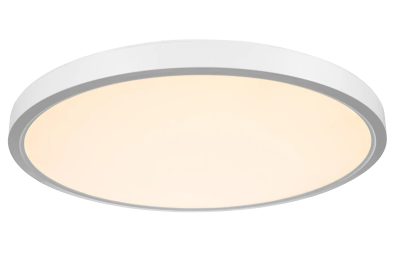
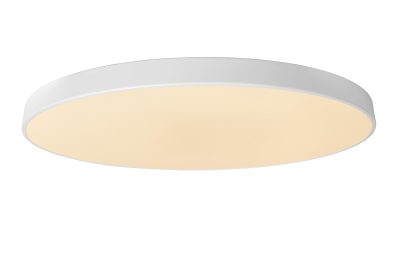
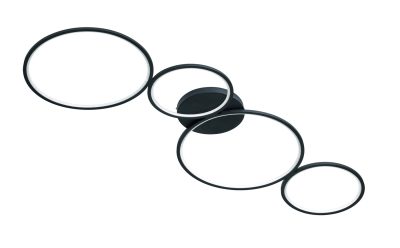
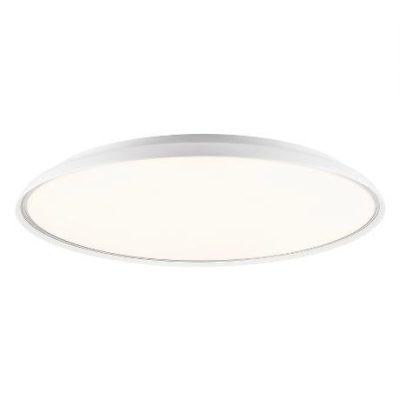
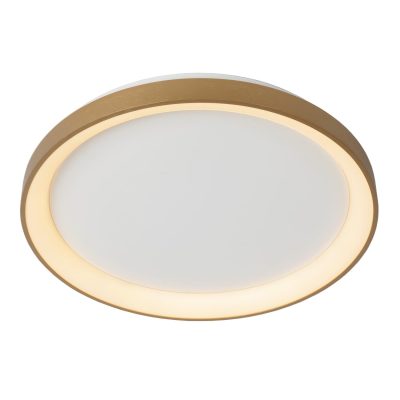
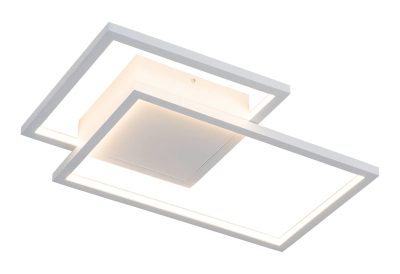
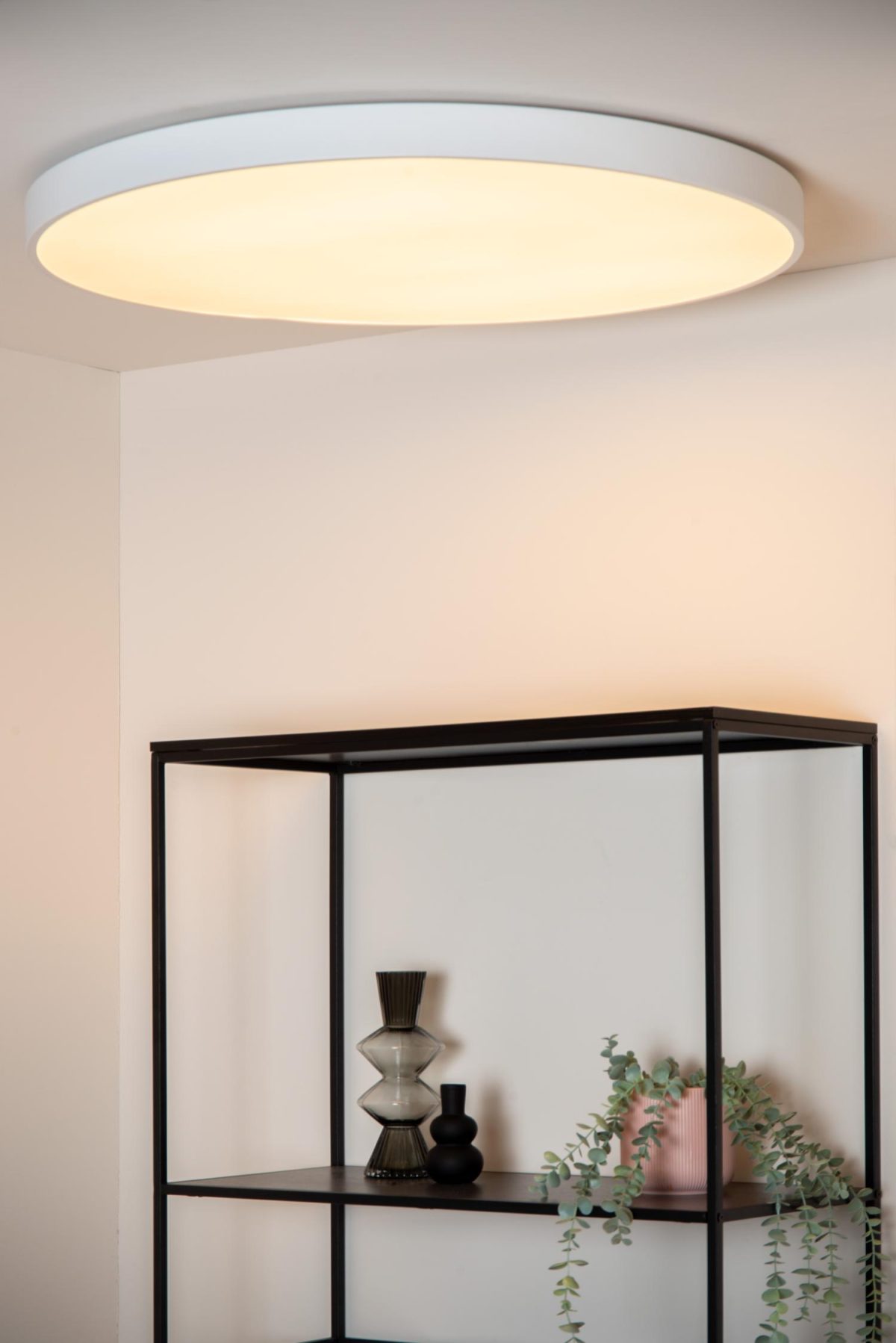
View allDimmable ceiling lights of 3,300 to 5,000 lumens. With light walls, one of them already delivers 150 lux in a room of 12 to 18 m².
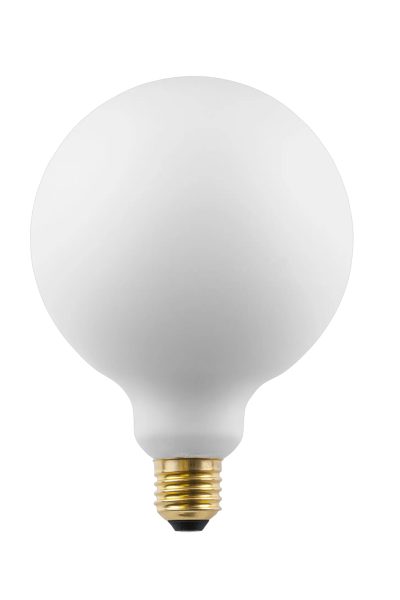
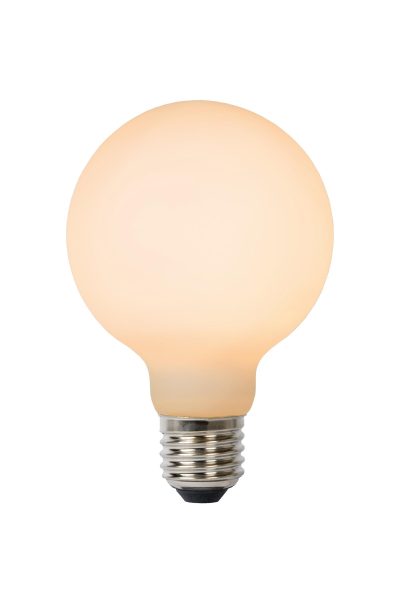
E27 LED bulbs of 800 lumens and more
View allEach of these bulbs gives at least as much light as a 60 W incandescent bulb.
Frequently asked questions
Is 800 lumens enough for a bedroom?
As the only light in a 12 m² bedroom, 800 lumens gives an average of about 35 to 40 lux. That is enough to move around in the evening, not to search the wardrobe or to vacuum. For 100 lux of basic lighting in 12 m², calculate 100 × 12 ÷ 0.55, about 2,200 lumens, spread over a ceiling light and two reading lights beside the bed.
How many lumens should a spotlight have?
A GU10 LED spotlight usually gives 300 to 600 lumens. The beam angle determines what you do with it: the same 350 lumens gives a bright patch in a 24-degree beam and a soft one at 60 degrees. How many spotlights you need and at what spacing, you work out with the spotlight calculator.
What is the difference between lumens, lux and candela?
Lumens are all the light a bulb emits. Lux is the light that falls on one square metre. Candela is the luminous intensity in one direction: a narrow 350-lumen spotlight has far more candela in the centre of its beam than a 350-lumen globe bulb. With spotlights, candela therefore tells you more about the brightness of the patch than lumens do.
How do I measure how many lux there are in my room?
With a lux meter or with an app on your phone. An app gives a rough estimate, but enough to compare two situations. Measure in the evening without daylight, lay the device flat at table height and take the average of five or six spots in the room.
Can a room have too much light?
Yes. You rarely notice too much light from the number of lux, but you do from glare: a bright light in your field of view or a reflection in a screen. A room that is equally bright everywhere also looks flat. What you want is enough light where you are doing something, less around it, and a dimmer to choose.
Sources
- licht.wissen 14: Ideas for Good Home Lighting, licht.de (2009)
- Light for living and well-being in the living room, licht.de (2025)
- Küche: Lichtanwendungen Wohnen, licht.de (geraadpleegd 2026)
- Beleuchtungsniveau (waarden uit DIN EN 12464-1:2021), licht.de (geraadpleegd 2026)
- Luminance distribution: reflectiegraden volgens EN 12464-1, TRILUX (geraadpleegd 2026)
- Projektierung von Beleuchtungsanlagen nach dem Wirkungsgradverfahren (publicatie 3.5), Deutsche Lichttechnische Gesellschaft (LiTG) (1988)
- Commission Regulation (EC) No 244/2009, Annex II, Table 6 (equivalence claims), EUR-Lex, European Union (2009)
- Commission Regulation (EU) 2019/2020 laying down ecodesign requirements for light sources, EUR-Lex, European Union (2019)