Kelvin indicates the colour of white light: the lower the number, the warmer and yellower the light. Choose 2700 K for the living room, dining room and bedroom, 2200 K for mood lights that are on dimmed in the evening, 3000 K for the kitchen and bathroom, and 4000 K only for workspaces you use during the day. Keep lights you see together in the same colour temperature.
What does kelvin mean for a light bulb?
The colour temperature, expressed in kelvin (K), describes whether white light looks warm and yellowish or cool and bluish. The number comes from physics. An object that you heat first glows deep red, then orange, yellow and finally bluish white. A classic incandescent bulb burned at around 2700 K, a halogen bulb slightly higher. An LED bulb does not glow, which is why the term correlated colour temperature is used: the light of the LED resembles that of a glowing object at that temperature.
It feels the wrong way round, but a higher number means cooler light. 2200 K is amber, 6500 K is bluish daylight.
Lighting professionals divide white light into three groups: warm white below 3300 K, neutral white from 3300 to 5300 K and daylight white above 5300 K. In a home, almost everything happens between 2200 and 4000 K, and within that range you clearly see every step of 300 to 500 K.
Which colour temperature do you choose for each room?
Licht.de, the knowledge centre of the German lighting industry, recommends warm white of 2700 to 3300 K for the living room. For the other rooms, the table gives the usual choice and the reason.
| Room | Colour temperature | Why |
|---|---|---|
| Living room | 2700 K, mood lights 2200 K | Calm and warm, especially when the light is dimmed in the evening |
| Dining room | 2700 K | Faces and food look warm; above the table 3000 K is possible |
| Bedroom | 2200–2700 K | Evening light should be warm and soft |
| Kitchen | 3000 K | Fresher than the living room, still warm white; under the cabinets 4000 K is possible |
| Bathroom | 3000 K | Neutral enough at the mirror, warm enough for the evening |
| Home office | 3000–4000 K | Focused work during the day; not as the only light in the evening |
| Hall, corridor and stairs | 2700–3000 K | Matches the adjoining rooms |
| Outdoors | 2200–3000 K | Warm light looks calm against the façade and in the garden |
Which colour temperature suits your room?
When is the light mostly on?
What for?
Daylight during the day
Result
See lamps for this roomWhat do 2200, 2700, 3000 and 4000 K look like?
2200 K: amber, like a dimmed incandescent bulb
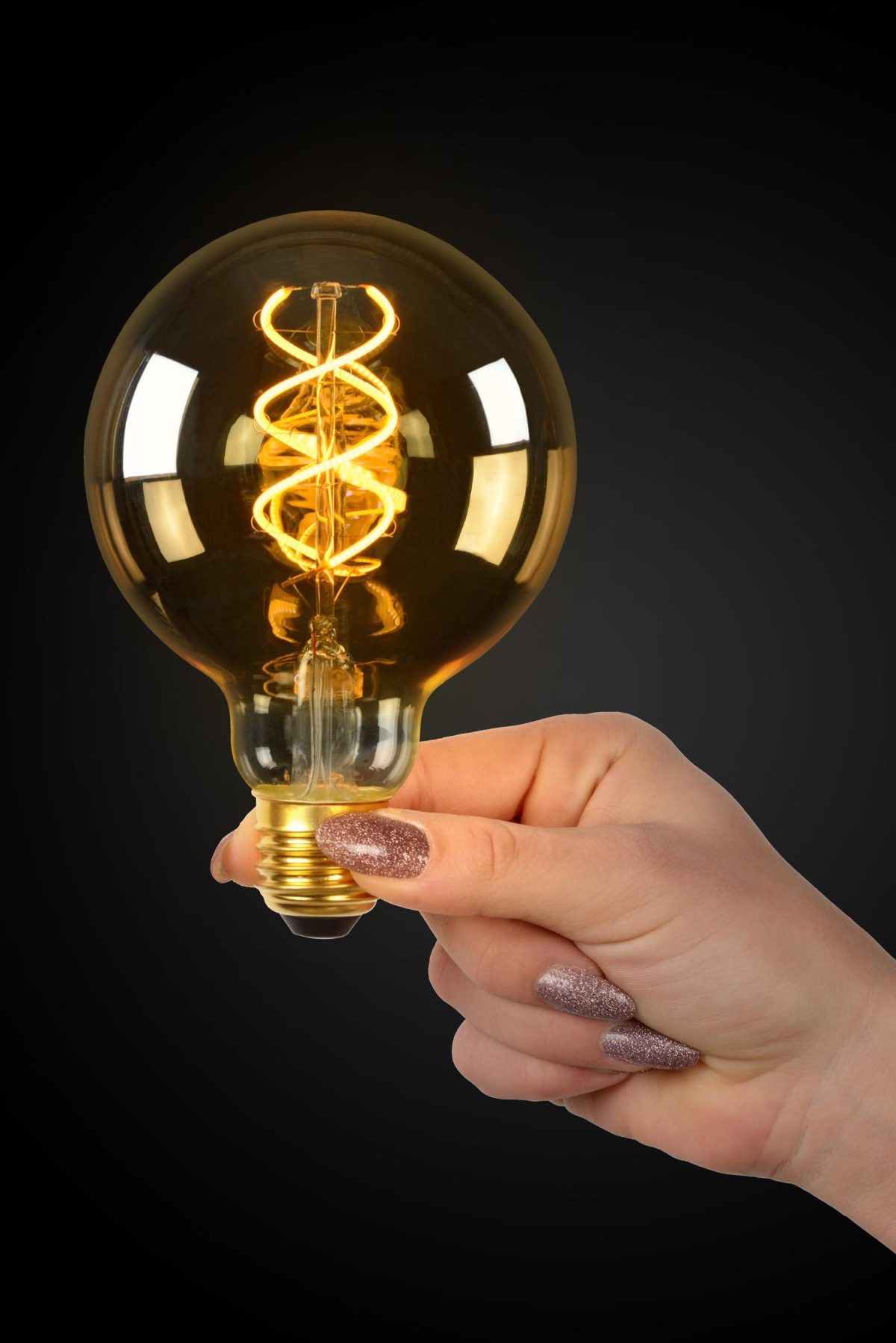
This is the light of filament bulbs with amber glass and of an incandescent bulb dimmed to a quarter. It belongs to bulbs you can see: a bare bulb in a pendant light, a candle bulb in a wall light, a table lamp on the windowsill. It is too orange for reading or cooking. Blue and green become dull, white becomes cream.
2700 K: the familiar warm white
The colour temperature of the old incandescent bulb and the standard for living spaces. Wood, terracotta, leather and skin take on a warm tone. If in doubt, choose 2700 K in the living room and bedroom.
3000 K: slightly fresher, still warm
Roughly the colour of halogen. White, grey and concrete stay white instead of turning yellow. That is why 3000 K suits kitchens and bathrooms with lots of white or grey surfaces, and a painting or cabinet whose true colours you want to see.
4000 K: neutral white
The light of offices and workshops. Bright and businesslike, and quickly chilly in a living room in the evening. On a desk during the day or as worktop lighting under kitchen cabinets it does work, provided you switch it separately from the warm light in the rest of the room.
Above 4000 K
Light of 5000 to 6500 K comes close to daylight under an overcast sky. At home it is useful in a garage, a studio or a hobby corner where you judge colours, and little beyond that.
Why is warm, dimmed light better in the evening?
Light does more than let you see. It also steers the biological clock, via cells in the eye that are particularly sensitive to blue-green light. In 2022 an international group of sleep researchers published concrete recommendations in PLOS Biology, expressed in melanopic lux at the eye: at least 250 during the day, at most 10 in the three hours before bedtime and at most 1 at night.
Colour temperature helps here, but quantity counts just as much. According to the same publication, many warm white LEDs for the home, of 2700 to 3000 K, have such a low melanopic content that they meet the evening limit more easily. A bright 2700 K lamp can still stimulate your clock more than a dimmed 4000 K lamp. As early as 2015, the Health Council of the Netherlands pointed to the higher proportion of blue light in LEDs and its influence on the biological clock, and called for products with less blue light for use in the evening.
In practice: warm white in the living spaces, dimmable, and in the evening a third or less of the light on. What that means in the bedroom is explained in bedroom lighting.
An older idea is that warm light is only pleasant at low lux and cool light at high lux, the so-called Kruithof curve from 1941. A review of later research by Steve Fotios, published in 2017, found little support for it: test subjects mainly found too little light unpleasant, without a preference for a particular colour temperature. So choose the colour temperature according to the moment and the room, and in any case make sure there is enough light.
Dim-to-warm, tunable white or a fixed colour temperature?
There are four ways to play with colour temperature. They look similar, but work differently.
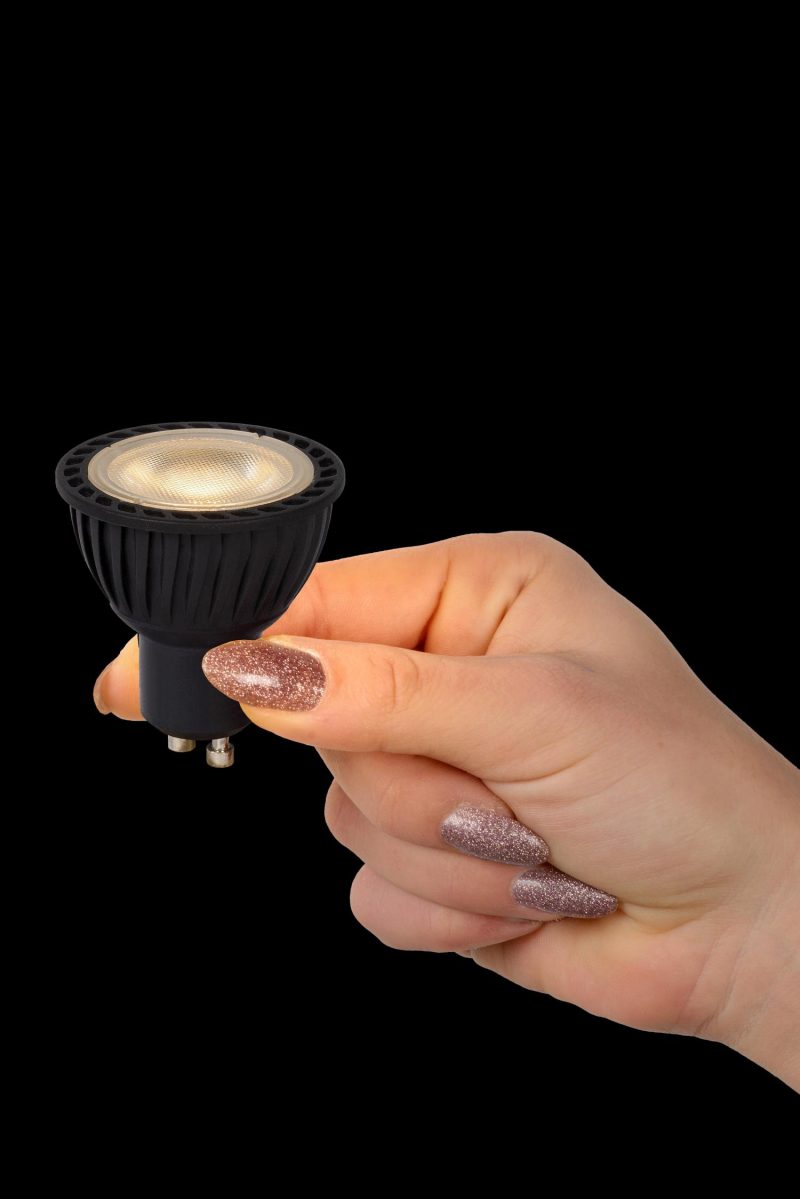
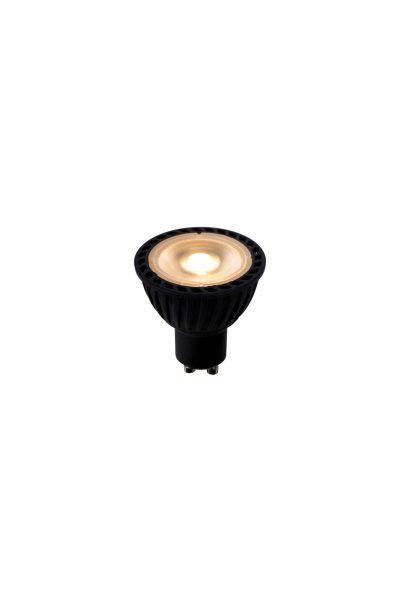
- Dim-to-warm. The bulb becomes warmer as you dim it, as an incandescent bulb used to. Lucide states 3000 K at full power and 2200 K dimmed for its dim-to-warm GU10 spotlight, with a compatible dimmer. You do not have to set anything: full light for cooking, dimmed for the evening.
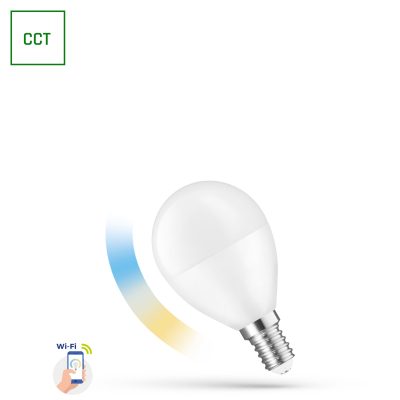
- Tunable white, also called CCT. You set colour temperature and brightness independently of each other, with a remote control, an app or a button on the light fitting. Handy in a bathroom or an open-plan kitchen that is also a living space.
- Selector switch. Some light fittings have a slider with two or three colour temperatures, which you choose during installation. That is not a dimming function, but you do not have to choose when ordering, and you can adjust after installation.
- Smart bulbs. A bulb with wifi, Bluetooth or Zigbee does both via an app and can run on a schedule. Licht.de mentions this for the kitchen: bright light with more blue in the morning, warm and dimmed in the evening.
Be careful with dimmers: a dim-to-warm bulb needs a dimmer that suits the bulb, and a smart bulb, on the other hand, must not go behind an ordinary dimmer. How that works is explained in dimming LED lamps.
Warm light for the evening: 1800 to 2200 K and dim-to-warm
View allBulbs for visible lamp holders and mood lighting, all dimmable.
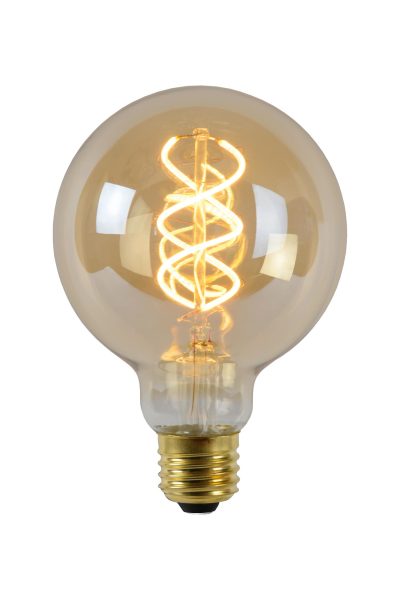
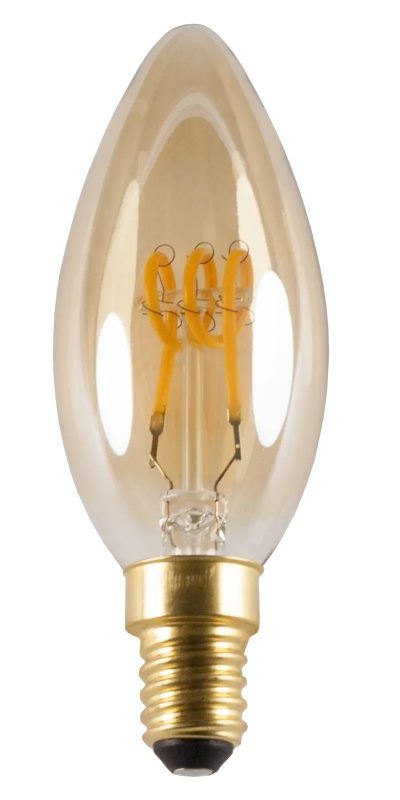
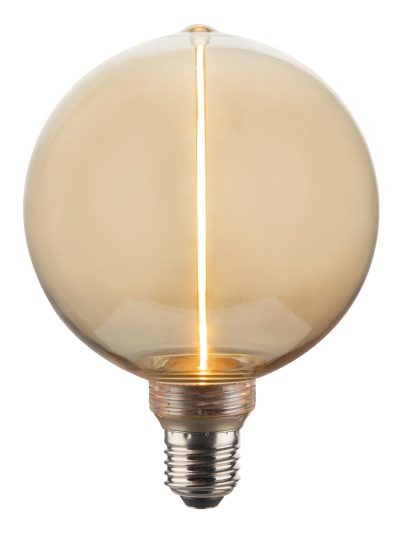
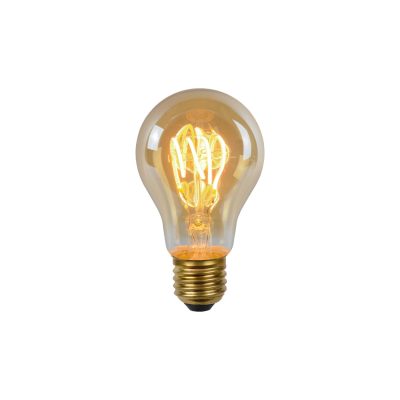
Can you mix colour temperatures in one room?
Within what you see at a glance, preferably not. A 4000 K ceiling light above 2700 K table lamps makes a room restless: the eye adapts to one light, and the other then stands out as too yellow or too blue. A practical rule of thumb is to keep lights within one field of view no more than 300 K apart.
Different zones may differ. Worktop lighting of 3000 or 4000 K in the kitchen and 2700 K above the dining table next to it works, as long as you switch them separately. In the evening you then switch the task light off.
Why two 2700 K bulbs can still look different
Kelvin only says how warm or cool the light is, not whether it leans slightly towards pink or green. Two bulbs with the same number can therefore differ side by side. The European ecodesign regulation 2019/2020 requires LED bulbs to stay within a six-step MacAdam ellipse, a measure of the colour deviation between individual units. That prevents large differences, but side by side on a white wall you can still see smaller ones.
So buy spotlights for one room in one go, of the same type, and if one fails, preferably do not replace a single spotlight with another brand. If that has happened anyway, put the odd one out in a place where you do not see it next to the others.
How do materials look under warm and cool light?
Warm light brings out the red and yellow in materials: oak, walnut, brick, terracotta and leather. Cooler light makes white, grey, concrete, blue and green look purer. A white kitchen with a grey worktop can look yellowed under 2200 K, a dark wooden cabinet flat and grey under 4000 K.
Colour temperature is something other than colour rendering. Colour rendering, in Ra or CRI, says how faithfully colours are shown at a given colour temperature. A 2700 K bulb with Ra 95 shows colours more truly than a 2700 K bulb with Ra 80, although the tone remains warm with both. More on this in colour rendering and CRI.
Where is the colour temperature on the packaging?
European rules require manufacturers to put the colour temperature in kelvin on the packaging of every light source. There is often also a three-digit code, such as 827 or 930. The first digit is the colour rendering class (8 for Ra 80 to 89, 9 for Ra 90 and above), the last two are the kelvin divided by a hundred. A 930 is therefore 3000 K with Ra 90 or better.
Some brands only write WW, NW or CW: warm white, neutral white, cool white. These abbreviations are not standardised. In our own range, CW from the same brand stands for both 4000 K and 6000 K. So always look at the number.
Setting the colour temperature yourself
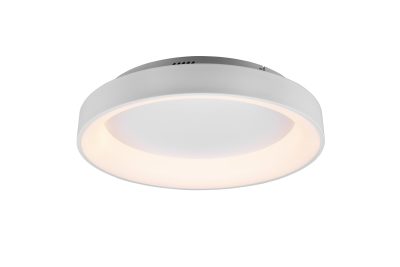
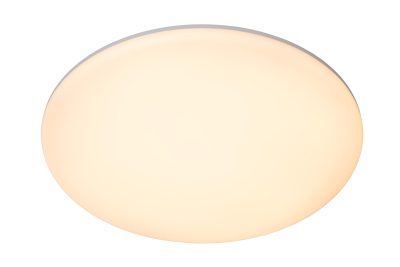
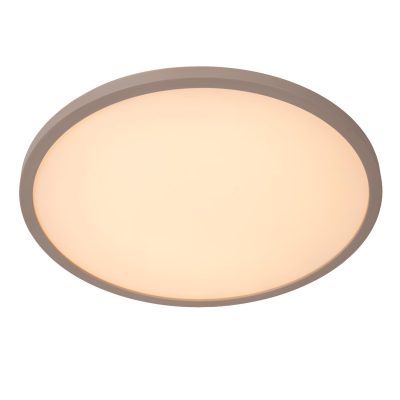
View allLight fittings and bulbs whose colour temperature you choose with a switch, a remote control or an app.
Frequently asked questions
Is 3000 K too cold for a living room?
No, 3000 K is still warm white. It is slightly fresher than 2700 K and mainly stands out next to 2700 K bulbs. If you have a living room with lots of white, grey or concrete, 3000 K can actually suit it better. In that case, choose all the bulbs in the room in 3000 K, and dim in the evening.
Is warm or cool light better for the eyes?
For seeing itself, the colour temperature makes little difference; enough light and no glare do. For the biological clock there is a difference: in the evening, warm, dimmed light is less activating than bright, cool light. During the day the light can be bright, preferably with daylight as well.
Why does my 2700 K bulb look yellow during the day?
Because your eyes adapt to daylight, which is much cooler during the day. Next to a window, 2700 K then looks yellow. In the evening, without daylight, your eye adapts to the lamp and the same light simply looks white. In a kitchen you mainly use during the day, 3000 K is therefore often the better choice.
Can I change the colour temperature of an ordinary LED bulb?
No. An ordinary LED bulb has one fixed colour temperature. If you want to be able to choose, take a tunable white bulb or a smart bulb. If you only want the light to become warmer when dimmed, take a dim-to-warm bulb.
Which colour temperature do I choose for a bathroom mirror?
3000 K is the usual choice: neutral enough to judge make-up and skin tone, and not too chilly in the evening. More important than a few hundred kelvin is high colour rendering and light from the sides instead of straight from above. More in bathroom lighting.
Sources
- Recommendations for daytime, evening, and nighttime indoor light exposure to best support physiology, sleep, and wakefulness in healthy adults (Brown e.a.), PLOS Biology (2022)
- Health risks associated with LEDs (adviesbrief), Gezondheidsraad (2015)
- A revised Kruithof graph based on empirical data (S. Fotios), LEUKOS, Illuminating Engineering Society (2017)
- licht.wissen 14: Ideas for Good Home Lighting (indeling warm wit, neutraal wit, daglichtwit), licht.de (2009)
- Light for living and well-being in the living room, licht.de (2025)
- Küche: Lichtanwendungen Wohnen, licht.de (geraadpleegd 2026)
- Farbwiedergabe (codering met drie cijfers), licht.de (geraadpleegd 2026)
- Regulation (EU) 2019/2020, Annex II (colour consistency and information on the packaging), EUR-Lex, European Union (2019)
- MR16 Led bulb, Dim to warm, GU10, 2200K/3000K, Lucide (geraadpleegd 2026)