An LED bulb only dims well if bulb and dimmer suit each other. Choose dimmable LED bulbs and a trailing-edge LED dimmer whose minimum load is below the total wattage of your bulbs, and then set the lowest dimming level. Flickering at the lowest setting, afterglow and humming are almost always caused by too low a load, the wrong dimming principle or a two-wire dimmer that does not suit the bulb.
Which LED bulbs can you dim?
Only the bulbs marked “dimmable”. An LED bulb contains a small power supply, the driver, which converts the mains voltage into the current for the LEDs. Only a driver designed for it understands what a dimmer does. The European ecodesign rules oblige manufacturers to state on the packaging if a bulb is not dimmable or only works with certain dimmers.
A non-dimmable LED bulb on a dimmer is no small matter. Signify, the manufacturer of Philips Hue, warns that it can cause flickering, humming and even damage to the bulb and the switch.
With fixtures that have built-in LED, the driver determines how you dim. There are four possibilities: with an ordinary wall dimmer (phase dimming), with a control signal such as DALI or 1–10 V, wirelessly via an app, or not at all. It is in the product details, usually as “dimmable (trailing edge)”, “triac dimmable” or “DALI”.
How does an ordinary dimmer work?
The mains voltage is an alternating voltage of 50 Hz: a hundred half-waves per second. A wall dimmer cuts a piece off each half-wave. An incandescent bulb thus receives less energy and glows less brightly. An LED bulb responds differently: the driver measures how much has been cut off and translates that into a lower current through the LEDs.
That is where the difficulty lies. How well that translation works depends on the combination. The American Pacific Northwest National Laboratory studied this for the US Department of Energy and found that dimming problems with LED are usually caused by a poor combination of bulb and dimmer, not by a poor bulb. What a manufacturer says about the dimming range is a possibility that you only achieve with the right dimmer.
Trailing edge or leading edge: what is the difference?
There are two ways to cut a piece off the wave. With leading-edge dimming, the dimmer only switches on some time into each half-wave, cutting off the beginning. With trailing-edge dimming, it switches on straight away and off again later in the wave, cutting off the end.
| Dimming principle | Also called | Cuts off | Originally for | With LED bulbs |
|---|---|---|---|---|
| Leading edge | Phase-cut leading edge, triac, RL | The beginning of each half-wave | Incandescent bulbs, halogen with a wound transformer | Sometimes works, more risk of humming and unsteady dimming |
| Trailing edge | Phase-cut trailing edge, RC, ELV | The end of each half-wave | Halogen with an electronic transformer | Usually the best choice, unless the bulb asks for something else |
| Universal | RLC, automatic detection | Chooses the principle itself | Mixed loads | Good if the manufacturer states an LED load |
Why is trailing edge usually the better fit? Many LED drivers do not draw their current evenly, but in short peaks. According to the research by the Pacific Northwest National Laboratory, these recurring current peaks in LED bulbs are often five to ten times higher than the average current. A leading-edge dimmer switches on abruptly in the middle of the wave and so delivers exactly the current surge that such drivers tolerate poorly. You hear that as humming and see it as unsteady dimming.
It is not a law. Some bulbs work better with leading edge, and the manufacturer then says so in the product details. Follow that advice, and be wary of general claims such as “works with all dimmers”.
Minimum and maximum load: the most common mistake
Every dimmer has a minimum and a maximum load in watts. Below the minimum, the dimmer does not get enough current to work properly itself. Old dimmers were made for incandescent and halogen bulbs. In the American research, the minimum load of most installed dimmers was around 40 W. Connect two 5 W LED bulbs to one and you are far below the minimum.
LED dimmers are designed for this. The Belgian manufacturer Niko gives a range of 4 to 200 W for its rotary dimmer for LED bulbs (310-04901), with an adjustable minimum to avoid blinking or going out at the lowest setting and an adjustable start level so that difficult LED bulbs also come on. That is the kind of information you are looking for.
The maximum works differently too. Because of those current peaks, an LED bulb loads the dimmer more than its wattage suggests. Manufacturers therefore state a separate LED maximum, lower than the maximum for incandescent bulbs. If it is not stated, the American report advises dividing the incandescent maximum by five to ten: a 600 W dimmer would then still control 60 to 120 W of LED bulbs.
Flickering, afterglow, humming: cause and solution
Most dimming problems can be recognised by what you see or hear. The table follows the symptoms described in the American research, with the solution that most often works at home.
| What you see or hear | Likely cause | What you do |
|---|---|---|
| Flickering or pulsing at the lowest setting | Below a certain level the driver gets too little signal | Set the dimmer’s minimum higher |
| Irregular blinking, also halfway | Dimmer and driver do not match, often the wrong dimming principle | Try trailing edge, or a bulb from the dimmer manufacturer’s compatibility list |
| Faint afterglow when the light is off | A two-wire dimmer powers itself via a small current through the bulb | Dimmer with a neutral wire, more load on the circuit, or a different bulb |
| Humming from dimmer or bulb | Current peaks from the driver, especially with leading edge, or too many bulbs | Trailing edge, fewer bulbs per dimmer |
| The light comes on at a third and will not dim lower | Lower limit of the driver | Set the minimum; choose bulbs with a wider dimming range |
| Bulbs on the same dimmer dim unevenly | Different types or brands on one circuit | One type of bulb per dimmer |
| Bulb gets warm or fails quickly | A non-dimmable bulb on a dimmer | Use a dimmable bulb |
| Flicker only visible on photos or video | Ripple in the driver’s current when dimmed | Choose a bulb with low flicker; see below |
Afterglow needs explaining. A two-wire dimmer is in series with the bulb and has no connection of its own to the neutral wire. To power its electronics, it lets a very small current flow through the bulb even in the off position. A filament does not notice it, but an LED driver sometimes does: it starts working and the bulb glows faintly or blinks in the dark. A dimmer connected to the neutral wire, a three-wire dimmer, does not have this problem. Check whether there is a blue wire in the switch box before you buy a dimmer.
Flicker you do not see, but do notice
Some LED bulbs flicker so fast that you do not consciously see it. You notice it as a stroboscopic effect: a spinning fan or a moving hand seems to stutter, or stripes run through a video. Since 1 September 2021 the EU has had a limit for visible flicker (Pst LM at most 1.0) and for the stroboscopic effect (SVM at most 0.9, and at most 0.4 since 1 September 2024).
Those limits apply at full power. There is no European limit for dimmed light. A bulb that burns steadily at 100 per cent may therefore flicker at 20 per cent. Manufacturers that measure it state the values in their technical data. If you are buying bulbs for a room where you often sit with dimmed light, it is a question worth asking.
Can you dim an LED bulb from two places?
Not with every dimmer. An ordinary rotary dimmer only works in a single-pole circuit, with one switching point. Niko says so literally for the LED dimmer mentioned above: not suitable for two-way or intermediate switching. If you want to dim from two places in a hallway or a living room with two doors, you need a dimmer with a secondary control unit, or a wireless solution where the second control is a wireless push button. Have an electrician look at the circuit: with two-way switching there are more wires in the box than with an ordinary switch.
Dimming without a classic dimmer
You do not always need to fit a dimmer in the wall. There are four other ways.
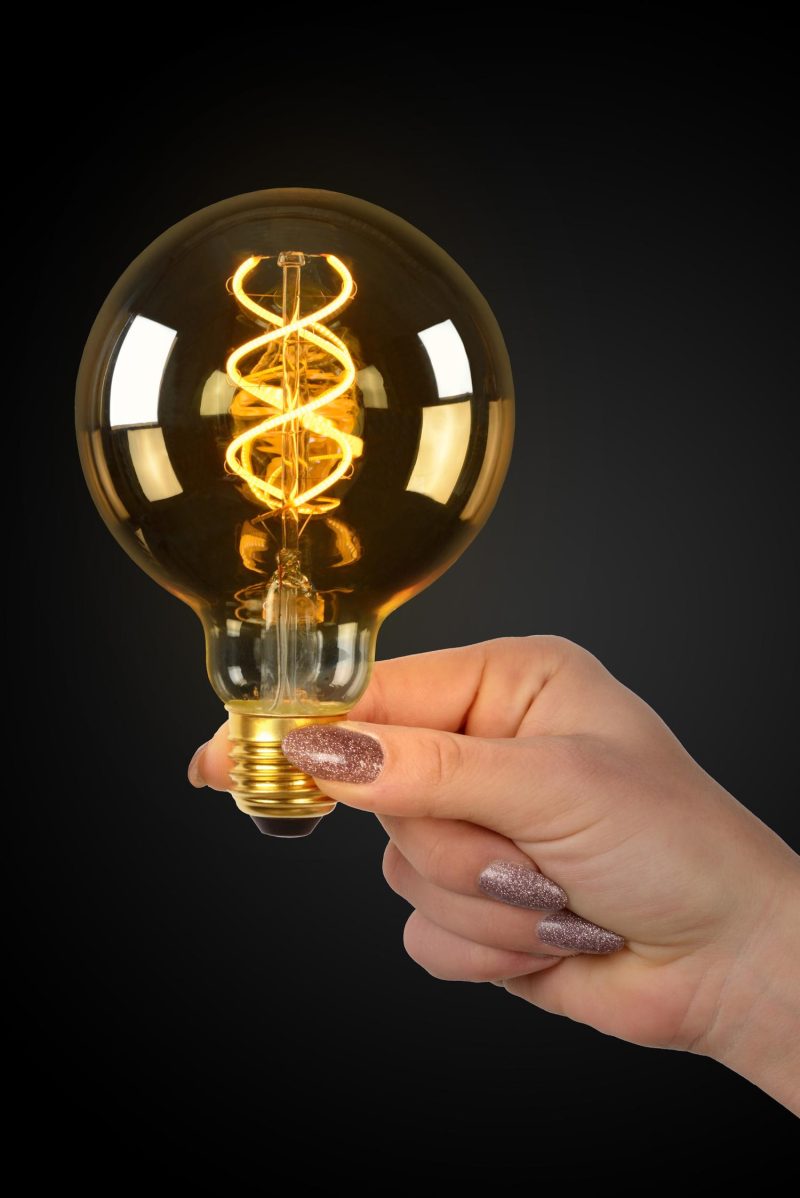
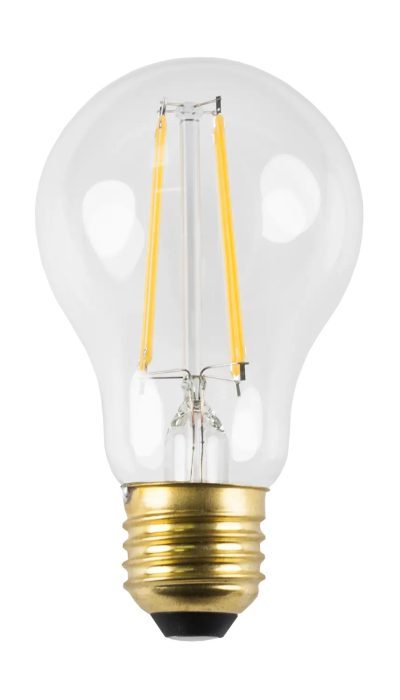
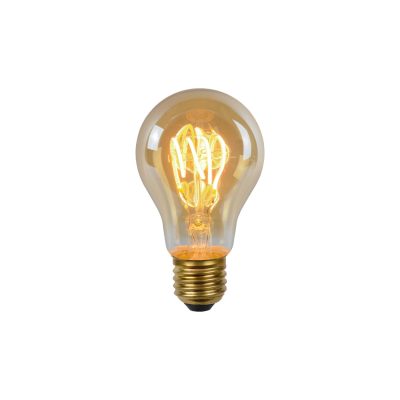
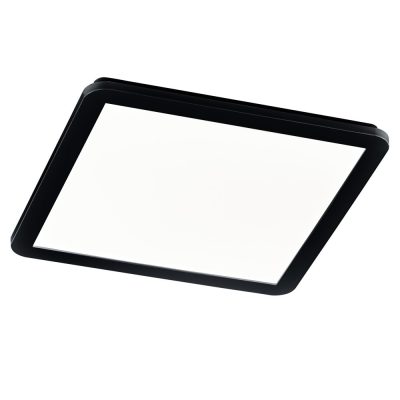
- Bulbs that dim with the ordinary switch. Lucide sells filament bulbs with “3 StepDim”: they dim in three steps with the existing light switch and remember the last setting. There are also ceiling lights that you dim with an ordinary switch.
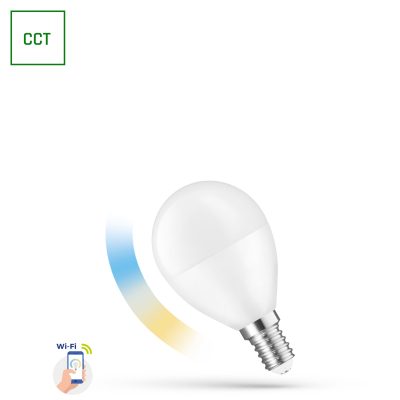
- Smart bulbs. A bulb with Wi-Fi, Bluetooth or Zigbee dims itself, controlled with an app, a wireless button or your voice. Never put such a bulb behind a wall dimmer: it needs a constant voltage. For the driver of its smart 48 V track system, Lucide expressly states that it is dimmable via the app and not compatible with an ordinary wall dimmer.
- LED strips. You dim an LED strip via the power supply or via a controller between the power supply and the strip. An ordinary wall dimmer only works with a power supply specified as “triac dimmable”. More in choosing an LED strip.
- Control signals. For larger installations, a system such as DALI, in which the dimmer sends a digital signal to each driver, is more reliable than phase dimming. It does need an extra control wire or a wireless variant.
Dim-to-warm: dimming like an incandescent bulb
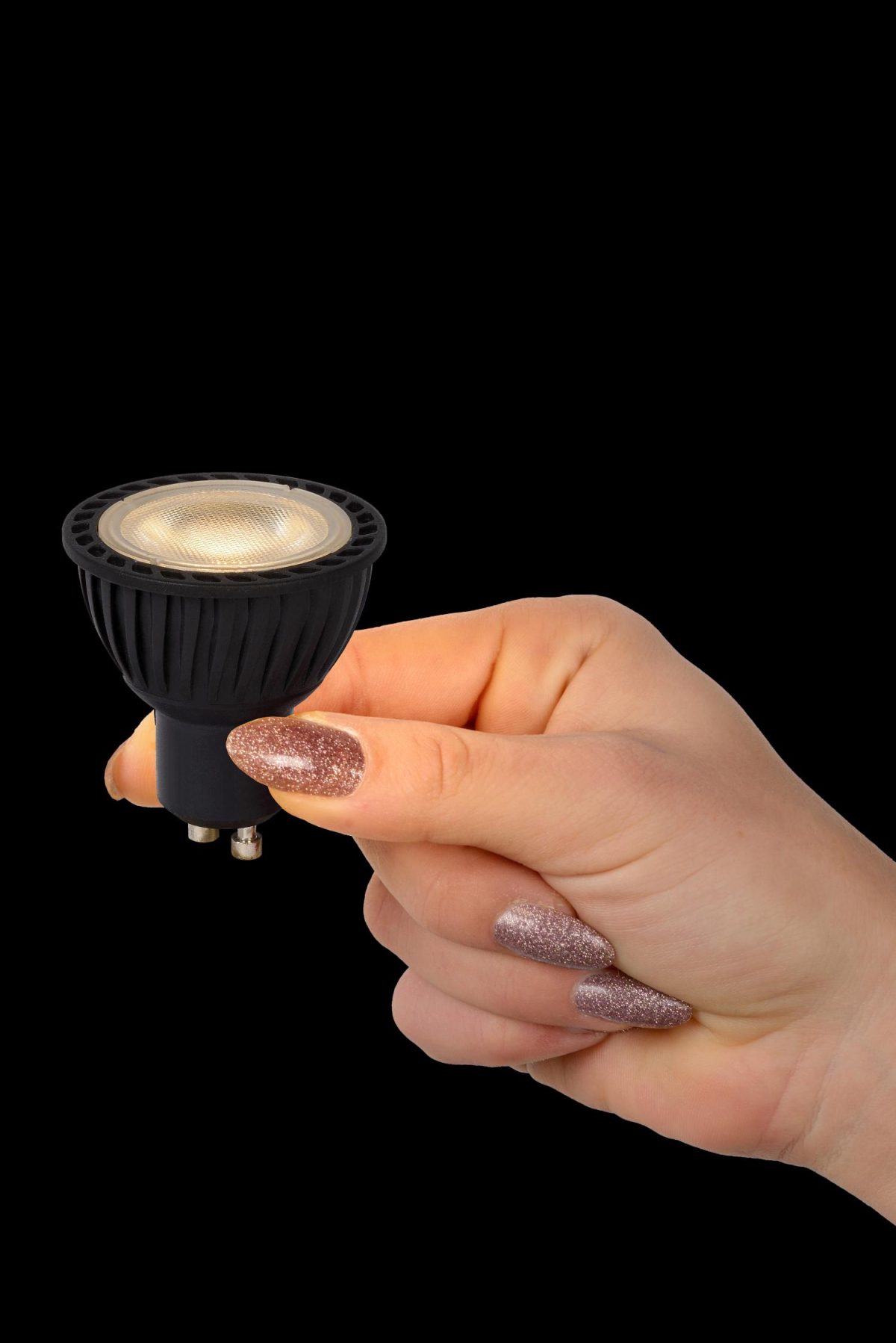
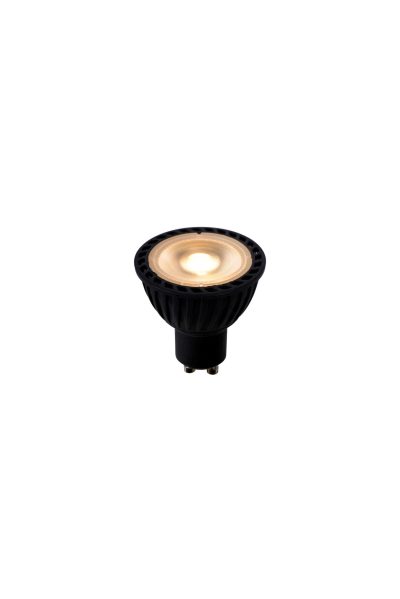
An incandescent bulb became warmer in colour when dimmed. An ordinary LED bulb does not: when dimmed it only gets weaker, and therefore looks cold in the evening. Dim-to-warm bulbs do: Lucide states 3000 K at full power and 2200 K dimmed for its dim-to-warm GU10 spotlight, with a compatible dimmer. How to choose the colour temperature further is explained in choosing a colour temperature.
How to choose a dimmer that works with your LED bulbs
- Add up the wattage and the number of bulbs
Add up all the bulbs on the circuit, in watts and in number. If you plan to add bulbs later, count them now.
- Check the bulbs
Do they say “dimmable”, and does the manufacturer say which dimming principle it recommends? Some manufacturers publish a list of tested dimmers. Use one type of bulb for the whole circuit.
- Choose the dimmer
A dimmer specified for LED, with trailing edge or the principle the bulb asks for. The LED minimum is below your total, the LED maximum well above it.
- Look in the switch box
If there is a neutral wire, you can use a three-wire dimmer, which works more steadily and causes no afterglow. With two-way or intermediate switching, you need a dimmer with a secondary control unit.
- Adjust the dimmer
After installation, set the minimum just above the point where the bulbs start to flicker. On dimmers with an adjustable start level, set that as well.
- Leave the work to someone who can do it
Replacing a dimmer means working on the fixed installation. Switch off the circuit at the fuse box, and leave it to an electrician if you are in any doubt.
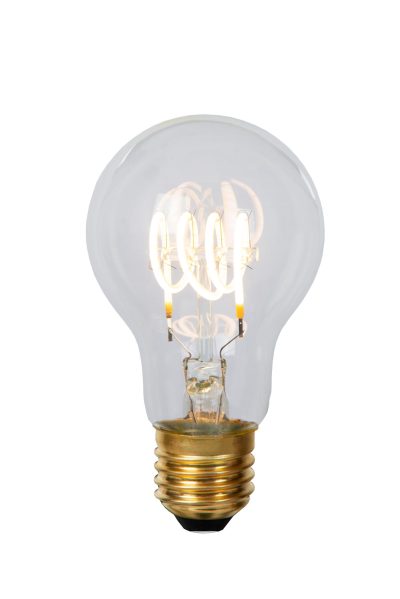
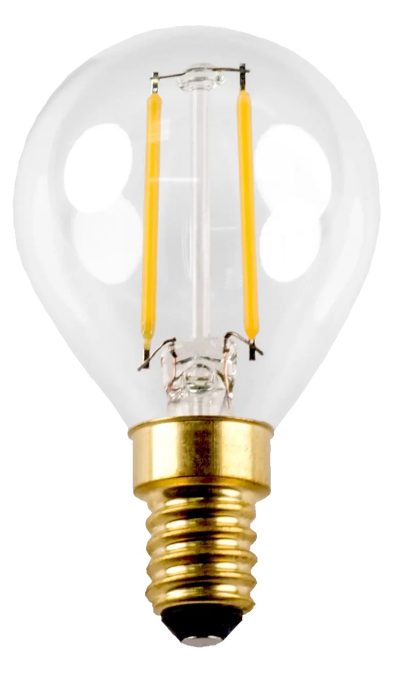
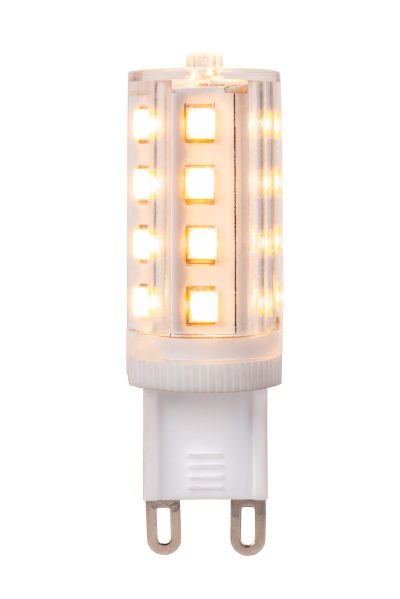
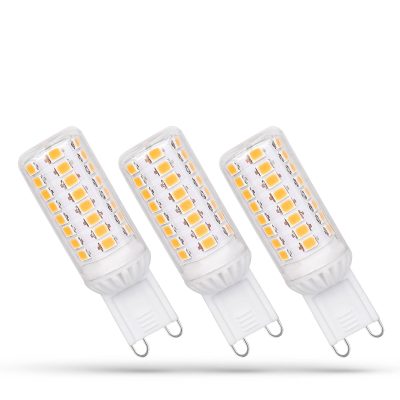
Dimmable LED bulbs
View allDimmable bulbs for the common bases, in warm white.
Dimming without a wall dimmer
View allBulbs that dim with the ordinary switch, and bulbs and spotlights you control with an app.
Frequently asked questions
Can a non-dimmable LED bulb go on a dimmer if it is always at full?
Better not. Even at the highest setting, many dimmers still cut a small piece off the wave, and the driver of a non-dimmable bulb is not made for that. Use an ordinary switch or a dimmable bulb.
How many LED spotlights can I put on one dimmer?
That is determined by the dimmer’s LED maximum, not by the maximum for incandescent bulbs. If no LED maximum is given, divide the incandescent maximum by five to ten. Also stay above the minimum: with too little load, the light starts to flicker or glow after switching off.
Why does my LED bulb not dim as low as the incandescent bulb used to?
Every LED driver has a lower limit. The American research describes LED bulbs that go out long before a halogen bulb would. An LED dimmer with an adjustable minimum gets the most out of the bulb; bulbs with a wide dimming range or dim-to-warm bulbs come closest to the old feel.
Does dimming save electricity?
Yes. A dimmed LED bulb draws less power. The relationship is not exactly proportional, because the driver itself also uses some power, but if you spend most of the time at half strength, you use noticeably less. How much LED lighting saves overall, you can read in what LED really saves.
Can I combine a smart bulb with an ordinary switch?
Yes, as long as the switch stays on. If you switch it off, the bulb can no longer be reached by the app. There are wireless wall buttons that you stick over the existing switch or mount next to it, so that nobody switches off the power by accident.
Sources
- Dimming LEDs with Phase-Cut Dimmers: The Specifier’s Process for Maximizing Success (PNNL-22945, N.J. Miller en M.E. Poplawski), Pacific Northwest National Laboratory voor het U.S. Department of Energy (2013, bijgewerkt 2014)
- Sokkel voor draaiknopdimmer voor ledlampen 4-200 W, 2-draads (310-04901), technische fiche, Niko (2026)
- Commission Regulation (EU) 2019/2020 laying down ecodesign requirements for light sources, Annex II (flicker and packaging), EUR-Lex, European Union (2019)
- Commission Regulation (EU) 2021/341 amending, among others, Regulation (EU) 2019/2020 (stroboscopic effect), EUR-Lex, European Union (2021)
- Can LED bulbs be dimmed?, Philips Hue (Signify) (geraadpleegd 2026)
- Premium LINIAL LED Driver 200W, 48V Smart Track, Lucide (geraadpleegd 2026)
- MR16 Led bulb, Dim to warm, GU10, 2200K/3000K, Lucide (geraadpleegd 2026)