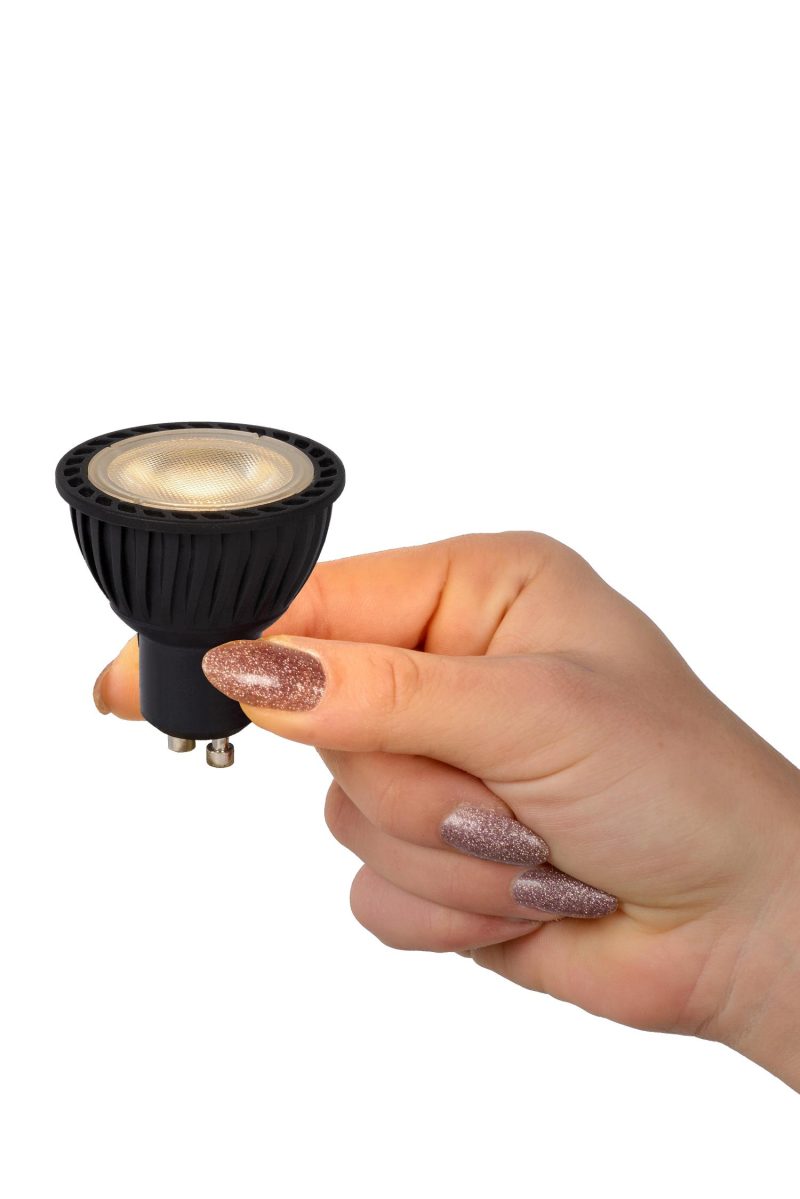
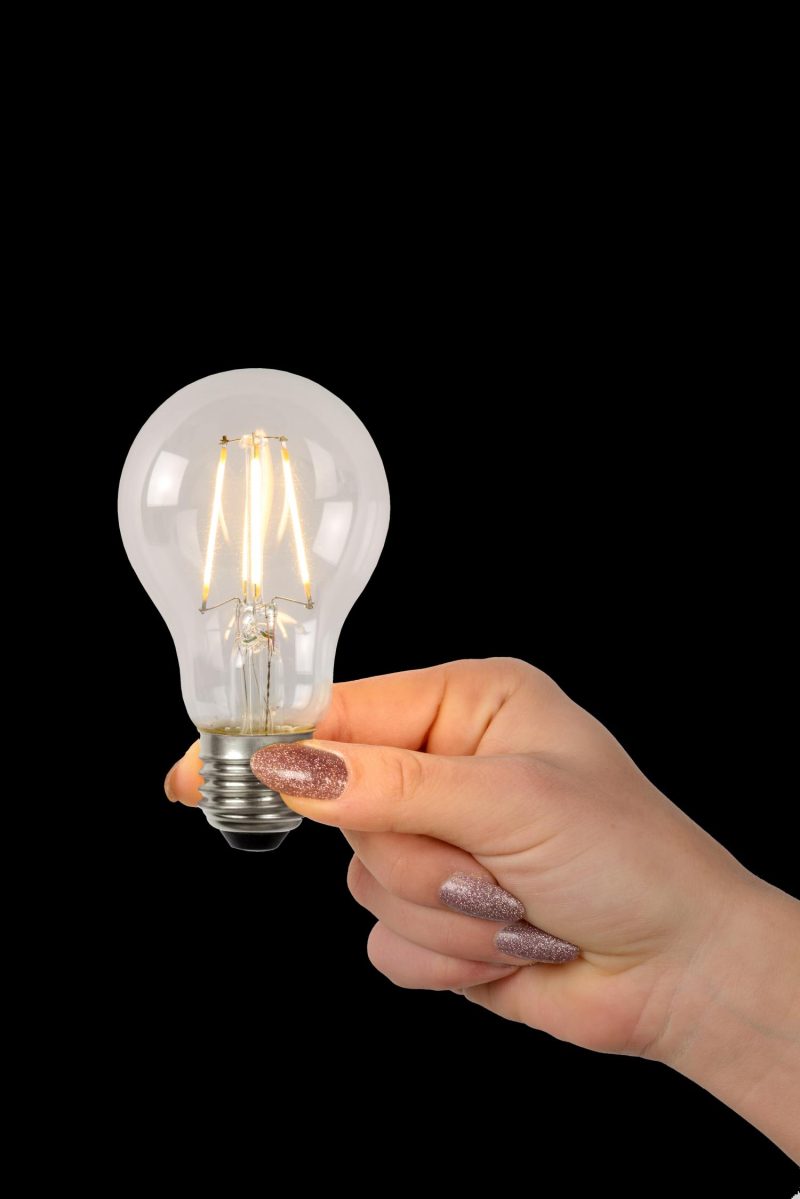
Enter the number of bulbs, the wattage of the old and the new bulb, how long they are on each day and your electricity price. The calculator gives the savings in kWh and euros per year, the payback time and what you save over the lifetime of the LED bulb. Ten 50 W halogen spotlights that are on for four hours a day, replaced by 5 W LED spotlights, save 657 kWh or about €210 a year.
What does this calculator work out?
How much electricity and money you save by replacing incandescent or halogen bulbs with LED bulbs, after how many months the new bulbs have paid for themselves, and what the difference is after five years and over the whole lifetime of the LED bulbs. If you choose a type of old bulb, the tool suggests an LED bulb that gives at least as much light.
How does the tool calculate?
- Power saving = number of bulbs × (old wattage − new wattage).
- kWh per year = power saving × hours on per day × 365 ÷ 1000.
- Euros per year = kWh per year × electricity price.
- Avoided replacements, if you enter the price of an old bulb: hours on per year ÷ lifetime of the old bulb × number × price.
- Investment = number × price of an LED bulb, plus what you enter for a new dimmer or transformer.
- Payback time = investment ÷ savings per year, in months.
- Savings over the lifetime = savings per year × the number of years the LED bulb lasts, minus the investment.
Which electricity price is filled in by default?
For Belgium €0.32 per kWh. That is the rounded CREG rate for the fourth quarter of 2026 in Flanders, 32.25 cents per kWh, an average all-in price including network charges, levies and VAT. In Brussels that rate is 36.88 cents, in Wallonia 37.79 cents. Because in Flanders about half of the network charges are billed through the capacity tariff on your monthly peak, a kWh saved there is worth slightly less; if you want to calculate cautiously, enter €0.30.
For the Netherlands €0.26 per kWh: the average variable supply rate for August 2026 according to CBS, €0.1469, plus the energy tax of €0.1109, both including VAT. Fixed costs and the tax reduction do not change with your consumption and are therefore not included.
Your own price is on your energy bill or in your contract and differs per supplier and per month. Enter it for the most accurate result.
What assumptions does the tool use?
| Old bulb | Luminous flux to match | Suggested LED bulb |
|---|---|---|
| Incandescent bulb 40 W | 470 lm | 5 W |
| Incandescent bulb 60 W | 806 lm | 8 W |
| Incandescent bulb 100 W | 1,521 lm | 15 W |
| Halogen spotlight GU10, 35 W | 200 lm in the beam | 5 W |
| Halogen spotlight GU10, 50 W | 300 lm in the beam | 5 W |
| Halogen spotlight MR16 12 V, 50 W | 540 lm in the beam | 6 W |
- Lifetime of the LED bulb: 15,000 hours by default, deliberately on the cautious side. Manufacturers state the lifetime as L70B50; Lucide, for example, gives 25,000 hours for its dim-to-warm LED spotlight. Enter the value for your bulb if you know it.
- Lifetime of the old bulb: 1,000 hours for an incandescent bulb, as licht.de states, and 2,000 hours for mains-voltage halogen, an assumption. For low-voltage halogen, licht.de gives up to 4,000 hours.
- Days in use: 365 per year. If a light is only on during working days, adjust this.
- Electricity price: constant. The tool does not predict price rises or falls.
Where these figures come from and when replacing pays off less is explained in detail in what LED really saves.
Frequently asked questions
Does the tool include a new dimmer or transformer?
If you enter it under extra costs, yes. 12 V halogen spotlights and dimmers for incandescent bulbs do not always work with LED; see dimming LED bulbs and lamp bases explained.
What do I enter if I do not know how long a light is on?
An average over the year. Light in the living room or kitchen is on longer in winter than in summer; take the middle. If in doubt, calculate with two values and see how much the result shifts.
Why do I get a shorter payback time than I expected?
Because the difference in wattage is large. A 50 W halogen spotlight uses ten times as much as a 5 W LED spotlight, and every kWh you save counts from the first day. For lights that are only on for a few minutes a day, however, the payback time quickly runs into years.
Sources
- Circulaire 2026/C/86: maximaal vast tarief per kWh voor thuisladen, vierde kwartaal 2026 (CREG-prijzen), FOD Financiën, samengevat door Forum for the Future (2026)
- Gemiddelde energietarieven voor consumenten (tabel 85592NED), CBS (2026)
- Wat betekent de invoering van het capaciteitstarief vanaf 2023 voor jou?, Test Aankoop (2022)
- Commission Regulation (EC) No 244/2009, Annex II, Table 6, EUR-Lex, European Union (2009)
- Commission Regulation (EU) No 1194/2012, Annex III, Table 6, EUR-Lex, European Union (2012)
- licht.wissen 14: Ideas for Good Home Lighting, licht.de (2009)
- MR16 Led bulb, Dim to warm, GU10 (levensduur 25.000 uur), Lucide (geraadpleegd 2026)