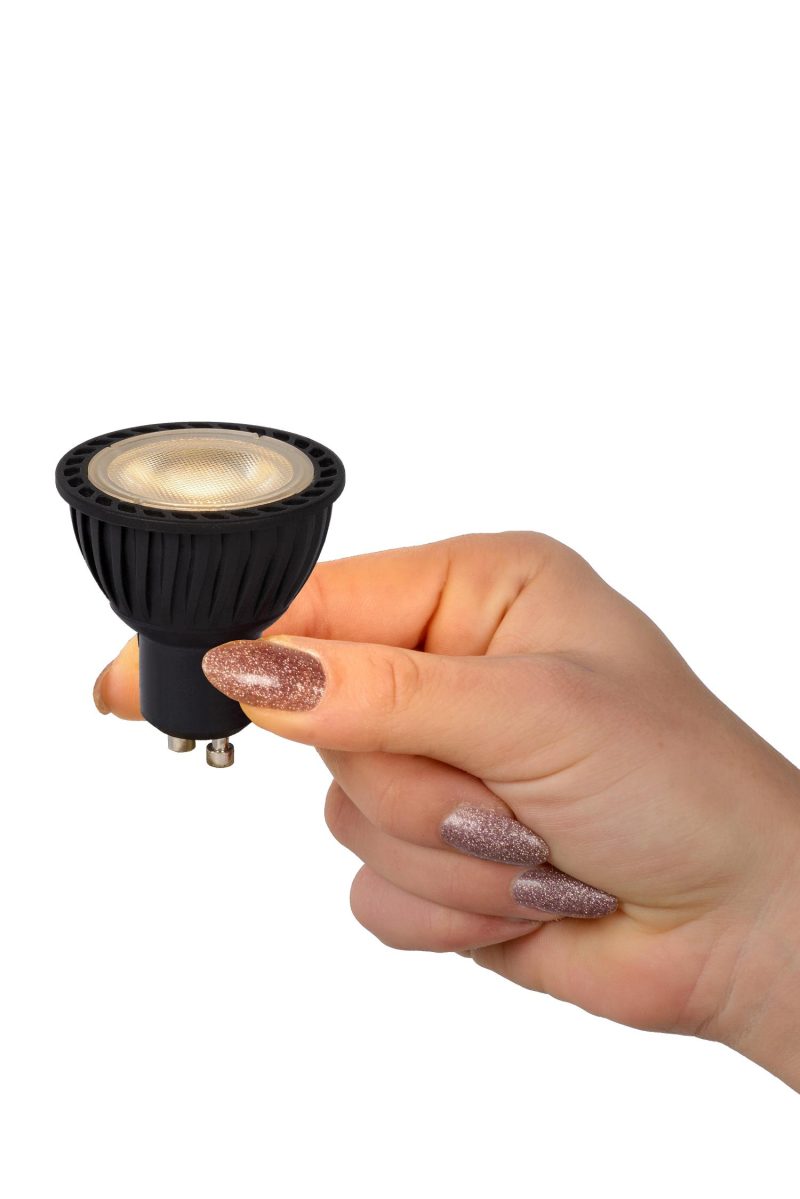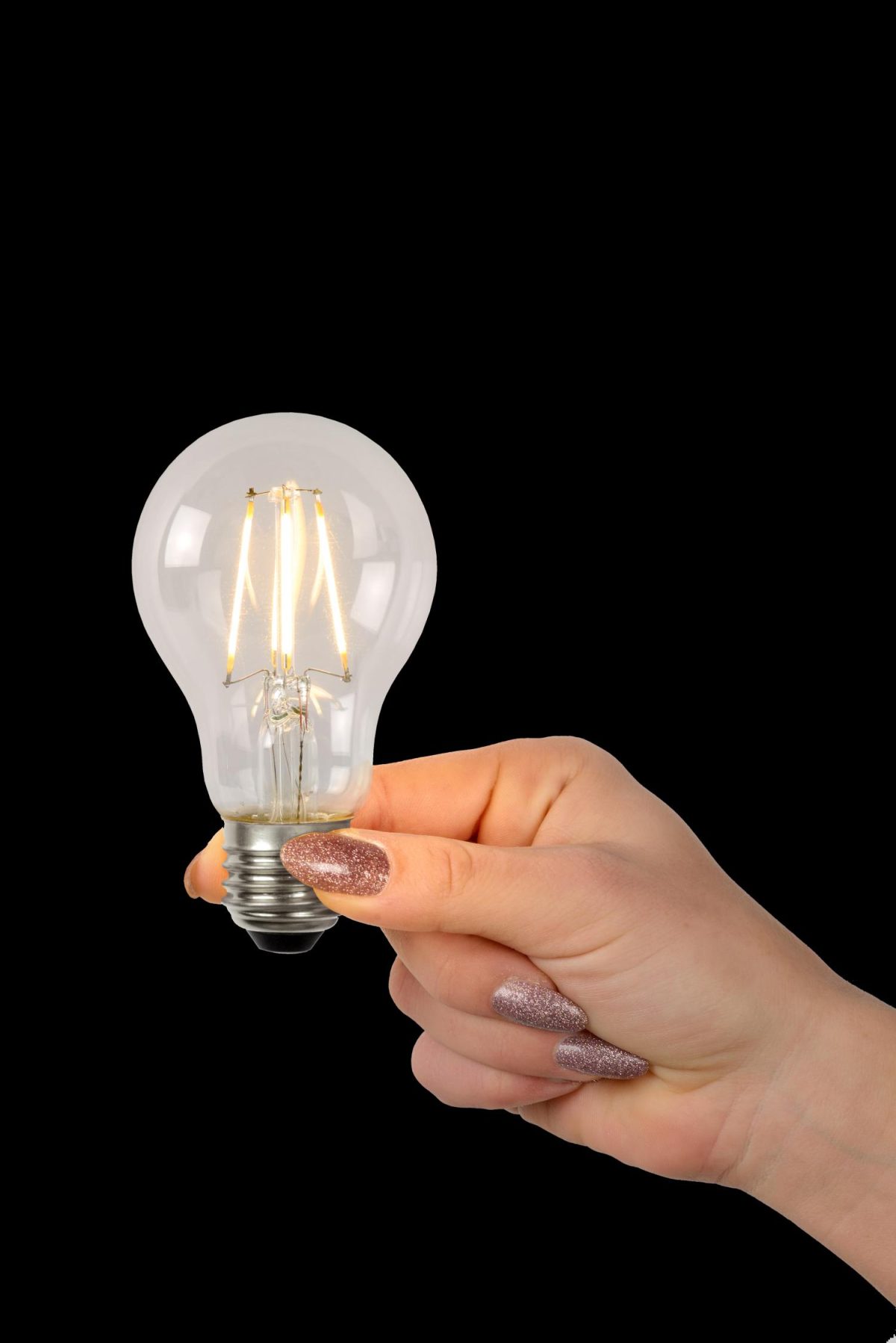
Since 1 September 2021, light sources in the EU have carried an energy label from A to G, calculated from the light output per watt: class A requires at least 210 lumens per watt, below 85 lumens per watt it is G. As a result, many good LED bulbs are in E, F or G, even though they use a fraction of what a halogen bulb does. Light fittings have no label, unless the LED cannot be removed; then the fitting itself counts as the light source. The QR code on the label leads to the European database EPREL.
What is on the energy label of a light bulb?
The energy label for light sources has been mandatory since 1 September 2021 in the form you now see in the shops. It is laid down in the European Delegated Regulation 2019/2015. The European Commission summarises its content: an energy class on a scale from A, the most efficient, to G, the least efficient; the consumption in kWh per 1000 hours of use; and a QR code that leads to the product data in the European database EPREL.
| On the label | What it means |
|---|---|
| Energy class A to G | Calculated from the light output per watt; A is the most efficient |
| kWh/1000h | The consumption over 1000 hours of use. A 5 W bulb uses 5 kWh per 1000 hours |
| QR code | Opens the product information sheet in EPREL, the European Commission’s database |
| Brand and model identifier | To find the right product in EPREL |
The old label, with classes up to A++, disappeared at the same time. Shops had until 28 February 2023 to replace the old labels on their stock. A bulb with “A++” on the box therefore dates from before the changeover.
How is the energy class calculated?
The class depends on one number: the total mains efficacy, in lumens per watt. The regulation calculates it as the useful luminous flux divided by the power consumed, multiplied by a correction factor. That factor is 1 for an ordinary bulb that runs directly on 230 V and radiates in all directions. Spotlights get a factor of 1.176, because with a spotlight only the light in the beam counts. Bulbs that do not run directly on the mains, such as 12V bulbs, get a slightly lower factor, because their transformer or power supply is not included in the consumption.
| Class | Total mains efficacy |
|---|---|
| A | 210 lm/W or more |
| B | 185 to 210 lm/W |
| C | 160 to 185 lm/W |
| D | 135 to 160 lm/W |
| E | 110 to 135 lm/W |
| F | 85 to 110 lm/W |
| G | less than 85 lm/W |
| Type of light source | Factor |
|---|---|
| Radiates in all directions, runs on 230 V | 1.000 |
| Radiates in all directions, does not run on 230 V | 0.926 |
| Spotlight or reflector, runs on 230 V | 1.176 |
| Spotlight or reflector, does not run on 230 V | 1.089 |
Why are so many good LED bulbs in E, F or G?
Because the scale is deliberately strict. When the energy labels were rescaled, the European Commission wrote that class A would initially remain empty, to leave room for technical progress. A bulb that used to be A++ can be a few classes lower on the new label, without anything about the bulb having changed.
On top of that, some types of bulb score low by definition, because they do something other than produce light for as little electricity as possible:
- Filament bulbs with coloured glass. Amber or smoked glass holds back part of the light. A decorative 3.5 W globe with 150 lm reaches 43 lm/W.
- Dim-to-warm and high colour rendering. Light with more red is less bright to the eye per watt. More on this in colour rendering and CRI.
- Small bulbs. A G9 capsule or a candle bulb has little room for cooling and electronics, and that costs efficiency.
So compare the label within the same type of bulb: two GU10 spotlights with each other, two candle bulbs with each other. Between an amber globe and an ordinary pear-shaped bulb, the letter says little about what you are buying. The fairest number remains lumens divided by watts, and for your bill the consumption in kWh.
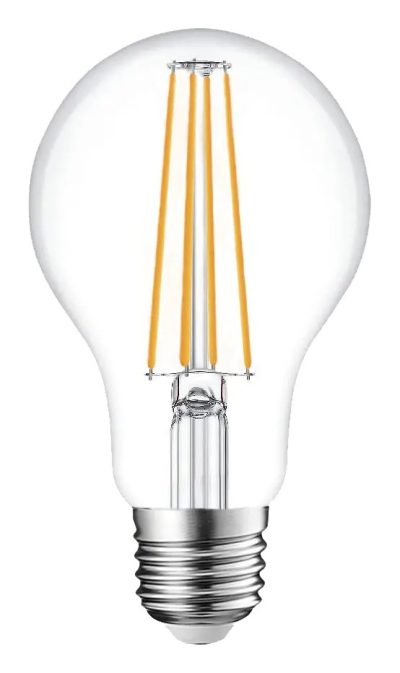
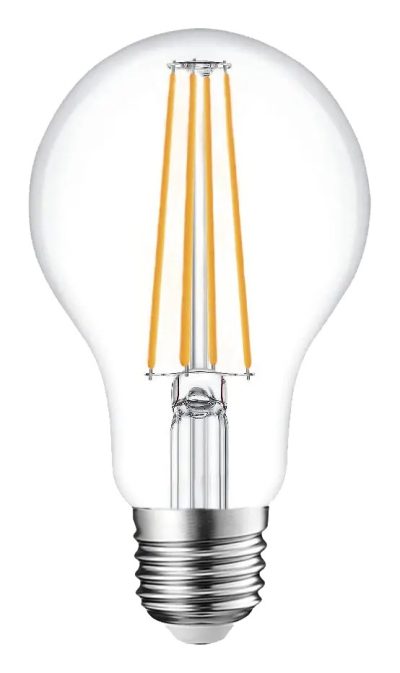
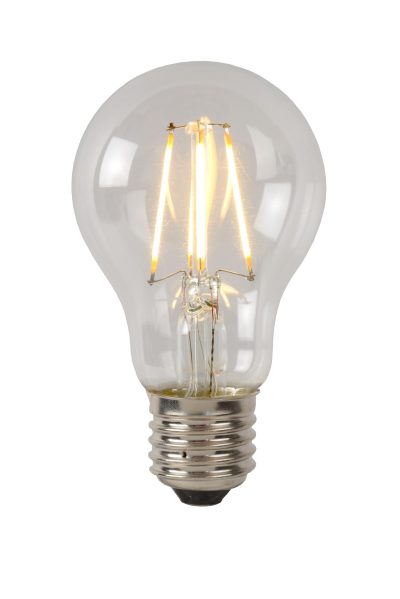
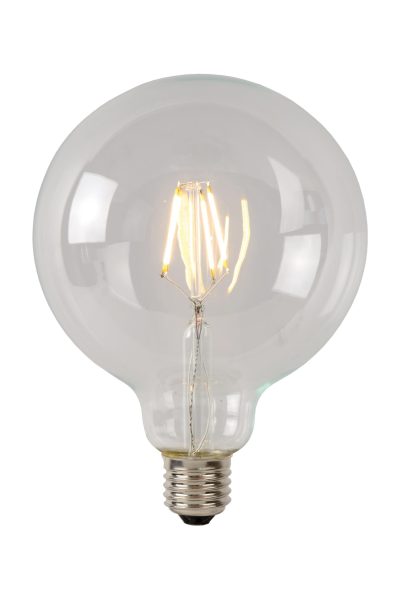
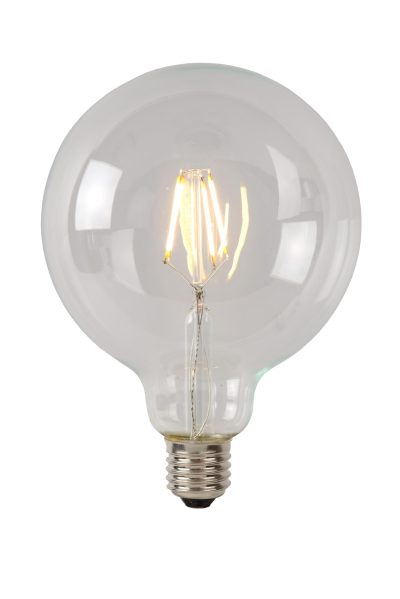
LED bulbs with a high light output per watt
View allArithmetically class A or B based on the stated lumens and watts; the official class is on the label.
Does a light fitting have an energy label?
No. Since 25 December 2019, light fittings no longer have to carry an energy label; the label belongs to the light source. With a pendant light with an E27 lamp base, it is the bulb you screw into it that has a label, not the fitting. The supplier of a light fitting that already contains a light source must, however, state which light source that is.
There is one important exception. If a light fitting cannot be dismantled to check the light source, then according to Article 2 of Regulation 2019/2015 the whole fitting counts as the light source. If it is sold in packaging, it gets a label itself. That is why you still see an energy class on some flush ceiling lights and spotlights with built-in LEDs.
A second rule concerns replacement. According to Article 4 of the ecodesign regulation 2019/2020, since 1 September 2021 light sources and separate drivers in a light fitting must be replaceable with ordinary tools and without damaging the fitting, unless the manufacturer can justify why that is technically not possible. Whether this is possible with your fitting is stated in the manual and, for sales to consumers, on the packaging, at least with a pictogram. How to recognise lamp bases is explained in lamp bases explained.
What is EPREL and what can you find in it?
EPREL is the European Product Registry for Energy Labelling, the European Commission’s database in which every product with an energy label must be registered before it is placed on the market. The public part can be consulted freely. The quickest way in is to scan the QR code on the label, or you search by brand and model at eprel.ec.europa.eu.
For a light source you find the label and the product information sheet there, with data that does not all fit on the box, such as the luminous flux, the power, the colour temperature, the colour rendering and the lifetime. After scanning, check that the address your phone opens really is eprel.ec.europa.eu: a QR code on a sticker can also lead somewhere else.
How must a webshop show the label?
When selling online, the label must be shown near the price. According to the Commission’s explanation, this may also be done with a coloured arrow showing the class and the scale, which leads to the full label and the product information sheet. If you see no class for a bulb online, you are entitled to ask for it.
What do the European rules require besides the label?
The label informs. The ecodesign regulation 2019/2020 also sets minimum requirements: a light source that does not meet them may not be placed on the European market.
| Requirement | What it means |
|---|---|
| Colour rendering | At least Ra 80, except for outdoor and industrial use |
| Visible flicker | Pst LM at most 1.0 at full power |
| Stroboscopic effect | SVM at most 0.9, since 1 September 2024 at most 0.4, at full power |
| Colour consistency | Within a six-step MacAdam ellipse |
| Lifetime | Stated as L70B50 and checked with endurance tests |
| Replaceability | Light source and driver in a light fitting replaceable, unless justified |
The phase-out of old bulbs rests on the same rules: compact fluorescent lamps with an integrated ballast and high-wattage linear halogen lamps disappeared in 2021, G9, G4 and GY6.35 halogen capsules on 1 September 2023. Fluorescent tubes and plug-in compact fluorescent lamps were phased out under the RoHS directive, because they contain mercury. Existing stock could still be sold.
What does the label tell you about your electricity bill?
The consumption in kWh/1000h is the most useful number on the label. If a bulb is on for three hours a day, that comes to about 1100 hours a year. An LED spotlight of 5 kWh/1000h then uses around 5.5 kWh a year, a 50 W halogen spotlight about 55 kWh. At an electricity price of €0.32 per kWh, that is €1.76 compared with €17.60 a year, per spotlight. How to work this out for your own home, with a current electricity price, is explained in what LED really saves.
Frequently asked questions
Is a bulb with energy class G bad?
Not necessarily. Class G runs from almost nothing to 85 lumens per watt. An LED spotlight of 75 lm/W and a halogen spotlight of 7 lm/W are both in G, but the LED spotlight uses a tenth. Compare bulbs of the same type, and look at lumens and watts.
Why is there no energy label on a pendant light?
Because light fittings have no longer carried a label since the end of 2019. The label belongs to the bulb you put in it. Only if the LED cannot be removed from the fitting for checking does the fitting count as the light source and get a label itself.
What does kWh/1000h mean?
The number of kilowatt hours the bulb uses in 1000 hours of use. The number is equal to the power in watts: a 7 W bulb uses 7 kWh per 1000 hours.
Are shops still allowed to sell bulbs with the old A++ label?
The bulbs, yes; the old label, no. Shops had to replace the old labels with the new one by 28 February 2023 at the latest. If you still find a box with A++, it is old stock on which the label has not been replaced.
What is the difference between the energy label and the ecodesign requirements?
The label tells you how efficient a bulb is within a scale. The ecodesign requirements determine what may be sold at all: a minimum efficiency, colour rendering and lifetime, and limits for flicker. A bulb that is sold legally in the EU therefore meets those minimum requirements; the label tells you how much better it does.
Sources
- Delegated Regulation (EU) 2019/2015 with regard to energy labelling of light sources, EUR-Lex, European Union (2019)
- Regulation (EU) 2019/2020 laying down ecodesign requirements for light sources, EUR-Lex, European Union (2019)
- Regulation (EU) 2021/341 (amendment on stroboscopic effect), EUR-Lex, European Union (2021)
- Light sources: energy label and ecodesign requirements, Europese Commissie (geraadpleegd 2026)
- Why should I scan the QR code on the energy label?, Europese Commissie (geraadpleegd 2026)
- European energy labels: rescaling and transition periods, Europese Commissie (2021)
- Regulation (EU) No 1194/2012, Annex III, Table 6 (reference luminous flux for reflector lamps), EUR-Lex, European Union (2012)
- One month to go before most general lighting lamps are phased out, LightingEurope (2023)
- MR16 Led bulb, Dim to warm, GU10, 2200K/3000K (energieklasse G), Lucide (geraadpleegd 2026)